Haze Season and IPPT Training: What You Need to Know
Last updated: 2 September 2026 | Written by Adrian Tan, IPPT Trainer and Fitness Content Specialist
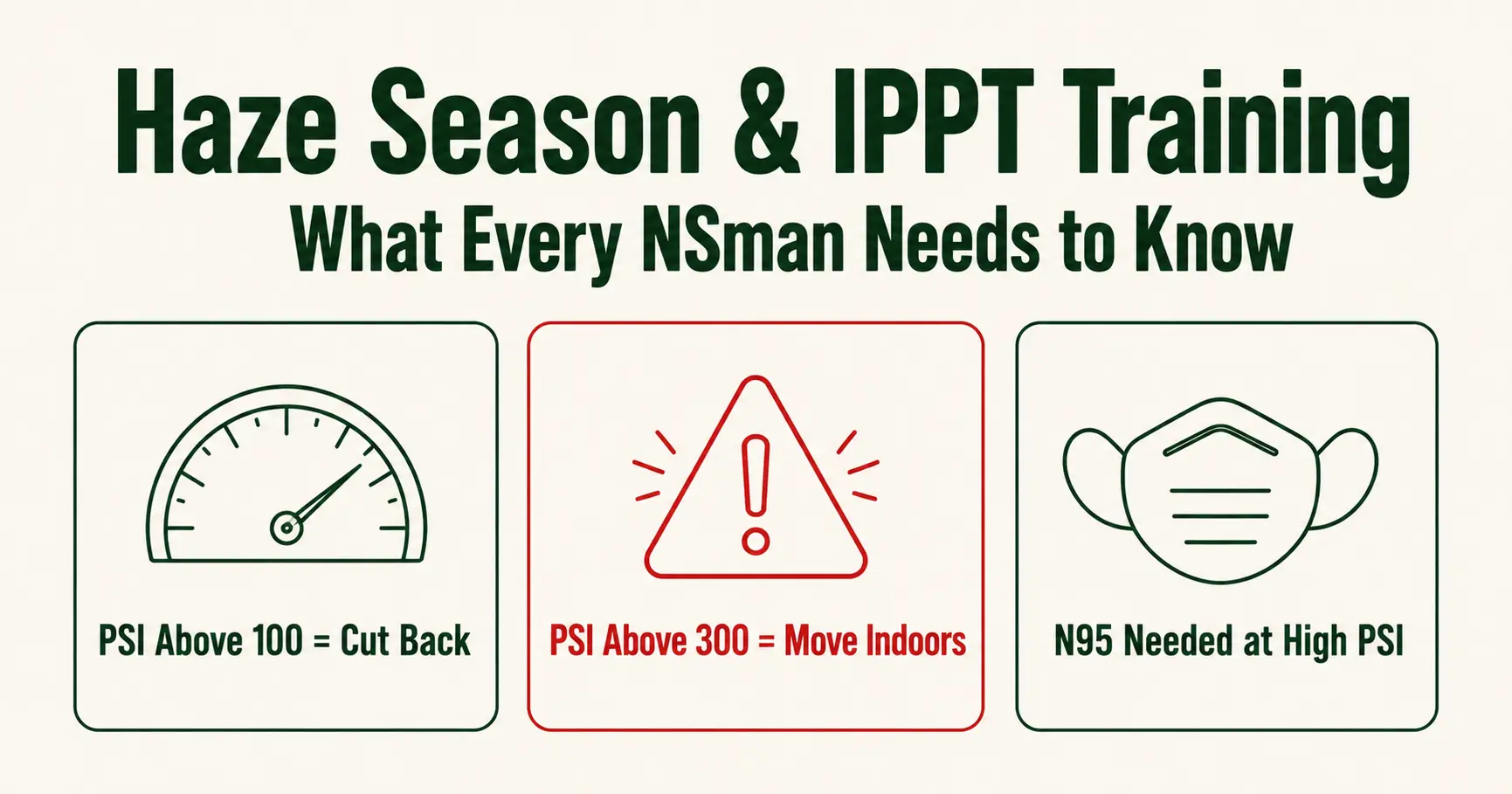
Check the 24-hour PSI reading before any outdoor IPPT training session during haze season. Above 100, cut back on strenuous outdoor exercise. Above 300, move your session indoors entirely: this is the same threshold SAF itself uses to cancel or relocate physical training. The Singapore Institute of International Affairs issued a rare “red alert” in its June 2026 Haze Outlook report, flagging August and September 2026 as the peak danger period, so this isn’t a distant seasonal concern this year, it’s relevant right now.
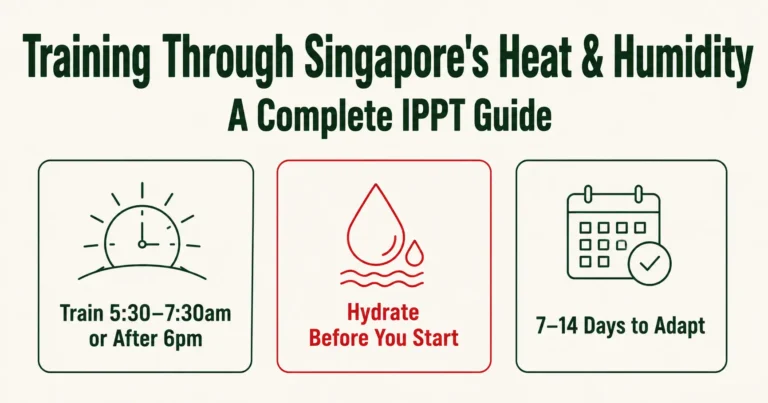
I bring this up with every client training through the second half of the year. Haze isn’t predictable months in advance, and pushing through a hard outdoor session on a bad-air day does more harm than good, even if your test date is close. If you’re also dealing with training through Singapore’s heat and humidity, the same conservative approach applies, and you can check your target numbers with the IPPT score calculator while you plan around conditions.
How to Read the PSI
NEA publishes a 24-hour Pollutant Standards Index reading, which is the official reference for planning activities, along with a 1-hour PM2.5 reading used for more immediate decisions. Here’s what the ranges mean for your training:
- PSI 101 to 200 (Unhealthy): Reduce or avoid strenuous outdoor exercise.
- PSI 201 to 300 (Very Unhealthy): Avoid outdoor activity entirely.
- PSI above 300 (Hazardous): SAF’s own protocol cancels or moves physical training indoors at this level, and N95 masks are required for anyone who must be outdoors for essential duties.
Check the current reading on NEA’s website or the myENV app before heading out, not just the forecast from the night before: haze conditions can shift within hours depending on wind direction.
What SAF Actually Does During Haze
MINDEF has publicly confirmed that the SAF adjusts physical and outdoor training in line with its PSI-Activity Guidelines during haze episodes. At the Hazardous threshold (above 300), training moves indoors or gets cancelled, and servicemen performing essential outdoor duties wear N95 masks. This isn’t a hypothetical precaution, it’s been applied during real haze episodes, so if you’re planning to train through a hazy week, expect FCC sessions and formal SAF training to follow the same logic. Our FCC guide covers what a typical session looks like if you want to know what to expect.
2026 Haze Season: What’s Different This Year
Singapore’s Haze Task Force, a coalition of 28 government agencies, has already convened twice in 2026, once in late January due to dry-weather fires in East Johor, and again in April. As of early August 2026, the 24-hour PSI in Singapore’s central region had reached 81, in the upper part of the moderate range, with NEA noting an increase in hotspot activity across Sumatra and Kalimantan due to dry conditions.
The Singapore Institute of International Affairs’ June 2026 Haze Outlook report went further than usual, issuing a rare “red” alert and naming August and September 2026 specifically as the peak danger period for transboundary haze affecting Singapore, Malaysia, Brunei, and Indonesia. If your IPPT window falls within these two months, build in flexibility for your training schedule rather than locking into outdoor-only sessions.
Masking Guidance
For short-term exposure, a few days of moderate haze, like a normal commute, N95 masks generally aren’t necessary, according to MOH. Surgical or cloth masks don’t filter fine particles effectively, so if you do need a mask for prolonged outdoor exposure at Hazardous PSI levels, an N95 with a proper fit is the only option that actually helps.
If you have asthma, are pregnant, are elderly, or have a young child, MOH advises reducing prolonged outdoor exposure at lower PSI thresholds than the general population. If any of this applies to you, don’t wait for the Hazardous range before adjusting your training plans.
This applies equally to Servicewomen training for their annual test, if haze conditions affect your outdoor sessions, use our Female IPPT Calculator to check your target numbers indoors while you wait for air quality to improve.
What to Do If Haze Hits Before Your IPPT Test
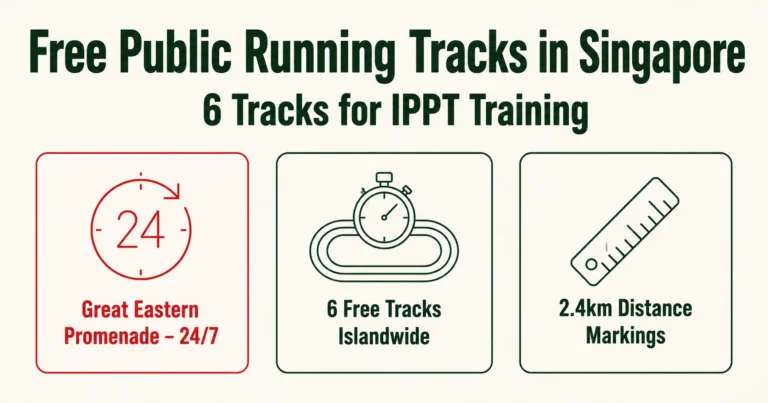
If your booked FCC session falls during a haze spike, don’t assume it will proceed as normal outdoors: check the NS Portal or contact your FCC for updates, since SAF may adjust or relocate sessions at high PSI levels just as it does for regular training. If you’re self-training and the PSI is in the Unhealthy range or higher, shift to an indoor track like the Great Eastern Promenade, which is sheltered, or postpone your outdoor session rather than pushing through.
Frequently Asked Questions
Adrian Tan – IPPT Trainer & Fitness Content Specialist
Adrian Tan has worked hands-on as an IPPT trainer at a gym in Singapore, coaching NSmen and NSF through push-ups, sit-ups, and 2.4km run preparation, including planning around weather and air-quality conditions. PSI thresholds and guidance in this article are drawn from official NEA and MOH sources; haze conditions change quickly, so always check NEA’s live PSI reading before training rather than relying on this guide for current conditions.