IPPT Safety Guide: Heat Injury Prevention
Last Updated:4 September 2026
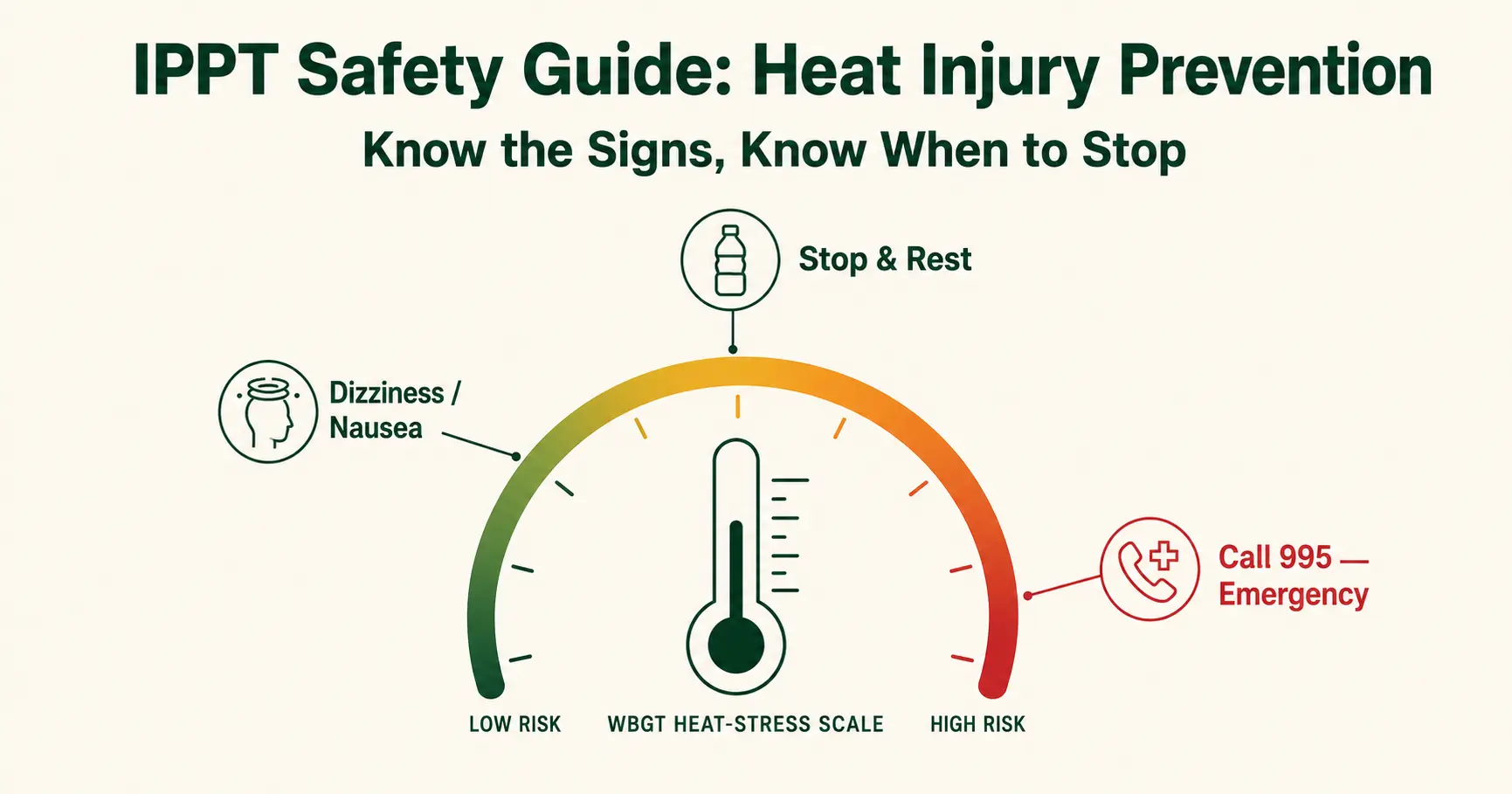
Heat injury risk rises sharply during strenuous exercise in Singapore’s climate. Know the early warning signs, weakness, dizziness, nausea, and headache, and stop immediately if they appear. If someone shows confusion, loss of consciousness, or seizures, that’s a medical emergency: call 995 right away. This guide covers recognition, not treatment. If you or someone with you shows these signs, the right move is always to stop and get medical help, not to push through.
Heat Injury Prevention vs Heat Training Tips: What This Guide Covers
This page is about recognising heat-related illness and knowing when to stop, not about pacing your run or picking a training time. If you’re looking for practical tips on training in Singapore’s heat, our guide on training safely in Singapore’s heat and humidity covers that ground. This page covers the medical side: what heat exhaustion and heat stroke actually look like, and when what you’re feeling stops being ordinary fatigue and becomes something that needs medical attention.
I’m not a doctor, and nothing here is medical advice. What I can do, after years of standing on FCC grounds and training grounds watching NSmen push through Singapore’s heat, is point you toward what recognised medical and government sources say about spotting the signs early. If in doubt, always default to stopping and seeking medical help.
What Are the Early Warning Signs?
According to Singapore’s National Environment Agency, early signs of heat-related illness include weakness, dizziness, visual disturbances, intense thirst, nausea, headache, vomiting, muscle cramps, breathlessness, palpitations, and tingling or numbness in the hands and feet.
These symptoms typically ease with rest in a cool area and fluids. The critical part is not ignoring them. If you feel any of these during training or on test day, that’s your signal to stop, not to push through for a few more reps or the last few hundred metres.
(Source: National Environment Agency, Singapore’s official Weather Information Portal on heat stress.)
When Does It Become an Emergency?
Heat stroke is more serious and requires immediate medical attention. According to NEA, signs of heat stroke include a core body temperature often above 40°C, along with complete or partial loss of consciousness, disorientation, and seizures. There are 2 recognised types: classic heat stroke from prolonged heat exposure, more common in vulnerable groups, and exertional heat stroke, caused by prolonged strenuous physical activity, which can affect relatively fit individuals.
If you see someone with confusion, disorientation, loss of consciousness, or seizures during or after physical exertion, treat it as a medical emergency. Call 995 immediately. According to SCDF, seizures, breathlessness, and loss of consciousness are explicitly listed as medical emergencies that warrant an emergency call, not a wait-and-see approach.
(Sources: National Environment Agency; Singapore Civil Defence Force official emergency medical services guidance.)
How Does Singapore’s Heat Actually Raise the Risk?
This isn’t a vague warning. Singapore’s Ministry of Manpower uses an official measurement called Wet Bulb Globe Temperature, or WBGT, which accounts for air temperature, humidity, wind speed, and solar radiation together, not just the number on a thermometer.
| WBGT Band | What It Means |
|---|---|
| Below 31°C | Baseline precautions apply |
| 31°C to below 33°C | Moderate heat stress, more caution and rest needed |
| 33°C and above | Highest heat stress band, mandatory rest breaks and closer monitoring required in workplace settings |
This official framework is built for workplaces, but the direction of the risk applies to anyone exercising outdoors here: the higher the WBGT, the greater the heat stress on your body, and the more caution you need. You can check current conditions through NEA’s myENV app rather than guessing from how hot it feels.
(Source: Ministry of Manpower’s official Heat Stress Advisory framework.)
What Does the SAF Itself Do to Prevent Heat Injury?
This isn’t just civilian guidance layered onto a military test. MINDEF has stated publicly that the SAF monitors weather closely and implements heat prevention measures including a Work-Rest Cycle based on WBGT during training, structured hydration regimes, and heat acclimatisation programmes for personnel.
A 2018 External Review Panel on Heat Injury Management in the SAF specifically emphasised that early recognition of heat injury is the most important element of prevention, and highlighted the need to reduce impediments that discourage soldiers from speaking up when they feel unwell. That’s the same principle this page is built on: recognise the signs early, and don’t hesitate to stop or say something.
(Sources: Ministry of Defence official statements and the External Review Panel on Heat Injury Management in the SAF.)
What Should You Do Before Your Test?
A few practical, non-medical steps reduce your risk going in. Stay consistently hydrated in the days before your test, not just the morning of. Avoid your first hard session in unfamiliar heat conditions right before test day. If you’ve been unwell, travelling from a cooler climate, or returning from a long break, ease back into training rather than testing at full intensity immediately.
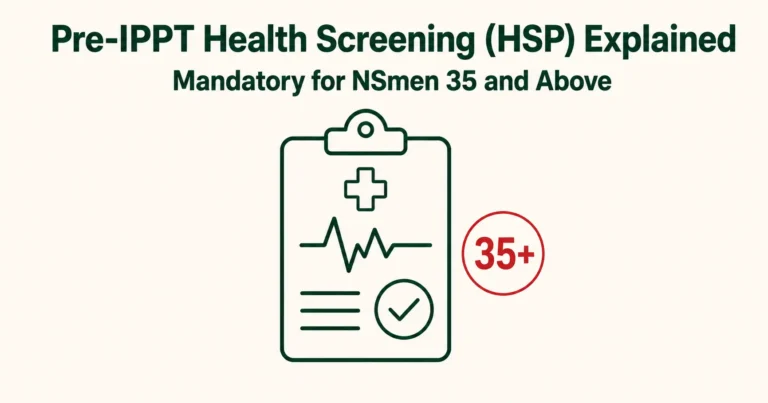
(For your full pre-test nutrition and hydration routine, see the What to Eat Before and After IPPT guide. For age-specific medical screening requirements, see the Pre-IPPT Health Screening guide.)
What If You’re Recovering From an Injury, Not Heat Illness?
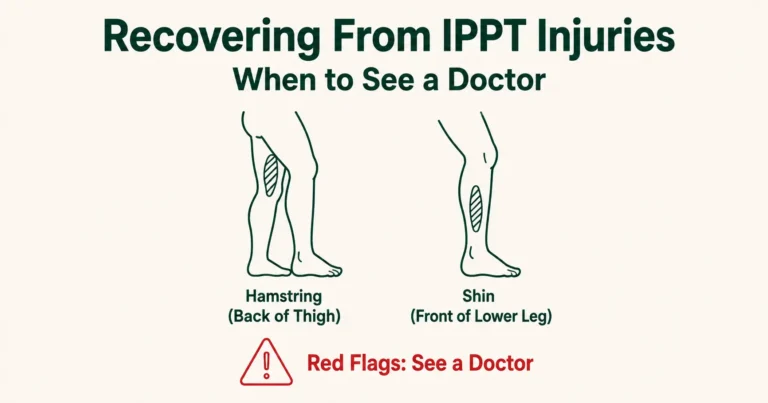
Heat injury and musculoskeletal injuries like a pulled hamstring or shin pain are different problems with different warning signs.
(For guidance on common training injuries and when they need a doctor’s attention, see the Recovering From IPPT Injuries guide.)
Bringing This Back to Your IPPT Prep
Safety isn’t separate from performance, it’s the foundation of it. A guy who trains hard but ignores heat warning signs doesn’t just risk his health, he risks a setback that costs him the whole training block. Once you’ve got the safety side sorted, head back to the IPPT Calculator to check your target score and start planning your training block.
Frequently Asked Questions
— Adrian Tan, IPPT Trainer & Fitness Content Specialist
This page is for general awareness only and is not medical advice. If you have health concerns, consult a doctor.