NSF vs NSmen vs Regular: IPPT Requirements Compared
By Adrian Tan, IPPT Trainer & Fitness Content Specialist | Last updated: 14 November 2026
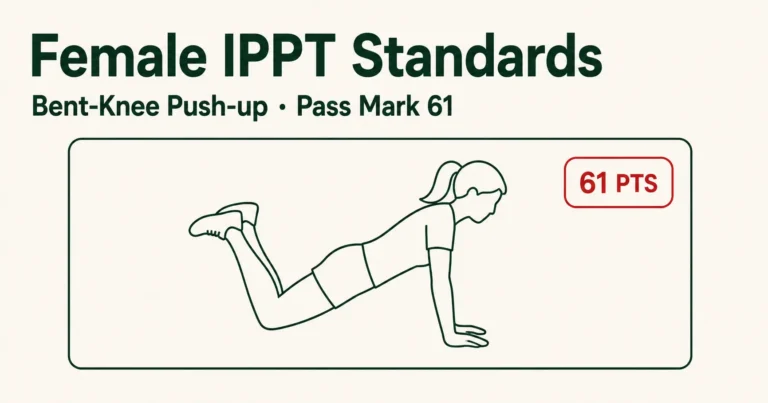
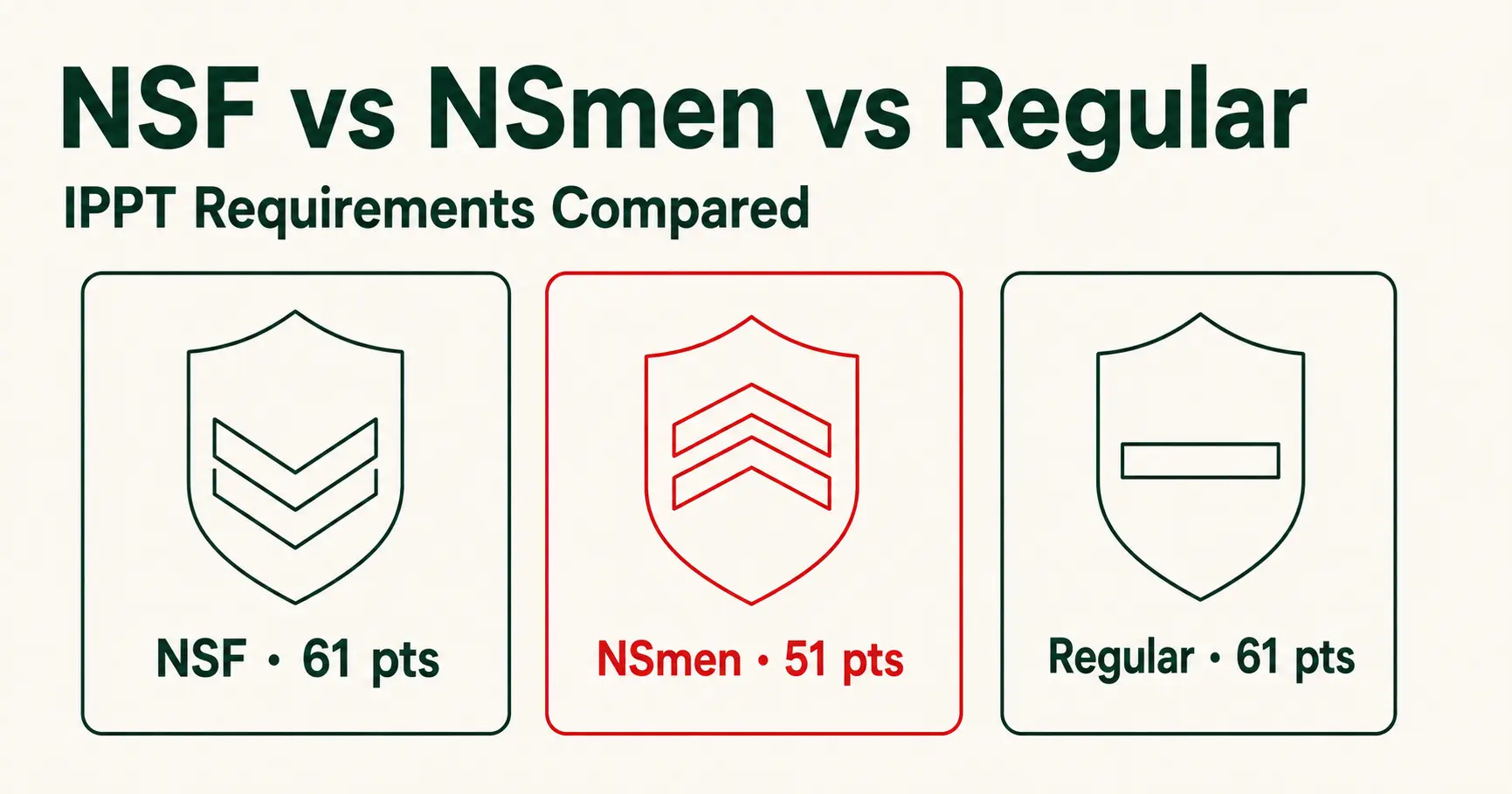
NSF, NSmen, and Regulars all take the same 3 IPPT stations, but the pass mark isn’t identical. NSmen pass at 51 points, while NSFs and Regulars pass at 61 points. The higher bar for NSFs and Regulars reflects that fitness training is built into their day-to-day service, unlike NSmen who train independently between annual tests.
Why Do NSF and Regulars Need a Higher Score Than NSmen?
This is the single most common point of confusion I run into as a trainer. Guys assume IPPT is one flat standard, then get caught off guard when a friend in a different category passes with fewer points than they needed. The gap is intentional. NSFs and Regulars have fitness training built into their scheduled work, so MINDEF holds them to a 61 point bar. NSmen train on their own time around jobs and family, so the bar sits lower at 51.
Both groups still need a minimum of 1 point in every single station regardless of total score. A strong overall total doesn’t cover for a zero in any one station.
Side-by-Side Comparison
| Category | NSF | NSmen | Regular |
|---|---|---|---|
| Service type | Full-time, during NS | Part-time, post-ORD | Full-time career |
| Pass mark | 61 points | 51 points | 61 points |
| Test frequency | During full-time service | Annually, in your window | As part of career service |
| Incentive payment | Through monthly salary | PayNow (NRIC-linked), otherwise within 10 working days | Through monthly salary |
| Training structure | Structured, unit-driven | Self-directed | Structured, unit-driven |
The exact reps and run time needed for these pass marks change by age band. If you haven’t already, check the IPPT Age Group & Scoring Standards guide to see how your specific band converts into these totals.
Does PES Status Change Anything Between These Categories?
Yes, and this is where a lot of guides oversimplify. PES status decides whether you take IPPT at all, and it applies slightly differently depending on your category:
| PES Grade | IPPT Requirement | Notes |
|---|---|---|
| A, B1 | Must attempt, no exemptions | Full test, all 3 stations |
| B2 (formerly C1) | Must attempt, partial exemption possible | May be excused from up to 2 static stations |
| B3, B4 | Exempt | Not required to take IPPT |
| C2 (NSmen) | Exempt | Not required to take IPPT |
| C2 (Regulars) | Alternative test may apply | Check your assigned test on OneNS |
The PES B2 exemption for up to 2 static stations applies whether you’re an NSF or NSman with that grading. For Regulars graded PES C2, an alternative test may apply instead of the standard IPPT. If you’re a Regular and unsure which test applies to you, don’t assume based on what an NSmen friend told you. Confirm your own PES grade and test type on OneNS.
How Does Training Differ Across the Three Categories?
I’ve trained guys across all three categories, and the mindset shift required is real. NSFs are inside a structured system: physical training is built into the weekly schedule, supervised, and consistent. Regulars carry that same structure into their career, often for years, which is part of why their higher pass mark tends to feel less intimidating over time.
NSmen are a different story entirely. You’re fitting training around a job, family, and whatever energy is left at the end of the day, with nobody checking in on your progress between tests. That’s exactly why I tell NSmen trainees to build a fixed weekly routine rather than cramming in the final month before their window closes. A rushed month of training rarely closes the gap that a full year of light, consistent effort would have covered.
What About SPF and SCDF Servicemen?
If you served in the Police or Civil Defence rather than the SAF, your call-up, training, and IPPT-linked scheme are administered separately through the MHA NS Portal. The 51 versus 61 comparison in this guide is SAF-specific. Don’t assume it transfers directly to SPF or SCDF categories. Check the MHA NS Portal for the scheme that applies to your service.
Does the Comparison Change for Elite Vocations?
Not at the Pass or Pass with Incentive level. Commando, Guards, and Naval Diver NSmen still pass at 51 points like any other NSmen. The difference only shows up at Gold, where these vocations need 90 points instead of the standard 85. Full incentive amounts and award structures are covered in our complete IPPT guide.
Frequently Asked Questions
Adrian Tan – IPPT Trainer & Fitness Content Specialist