Recovering From IPPT Injuries: When to See a Doctor
Last Updated: 12 September 2026
Hamstring strains and shin pain are the most common injuries I see during IPPT training. Mild cases often improve with rest, but you should see a doctor if pain doesn’t improve after 1 to 2 weeks of rest, if you can’t bear weight, if there’s significant swelling or bruising, or if the pain keeps coming back every time you resume training. This page tells you what these injuries generally look like and when professional care is the right call. It doesn’t replace a medical diagnosis.
Can You Diagnose a Hamstring or Shin Injury Yourself?
I’ve trained enough NSmen to know 2 things: these injuries are common, and self-diagnosing them is where people go wrong. What feels like a simple pulled hamstring can sometimes be something else entirely, and what looks like ordinary shin splints can occasionally be a stress fracture that needs completely different management.
This page focuses on 1 thing: helping you recognise when it’s time to get a professional opinion, rather than pushing through or guessing at treatment yourself. I’m not a doctor, and nothing here is a diagnosis or treatment plan.
What Does a Hamstring Strain Typically Feel Like?
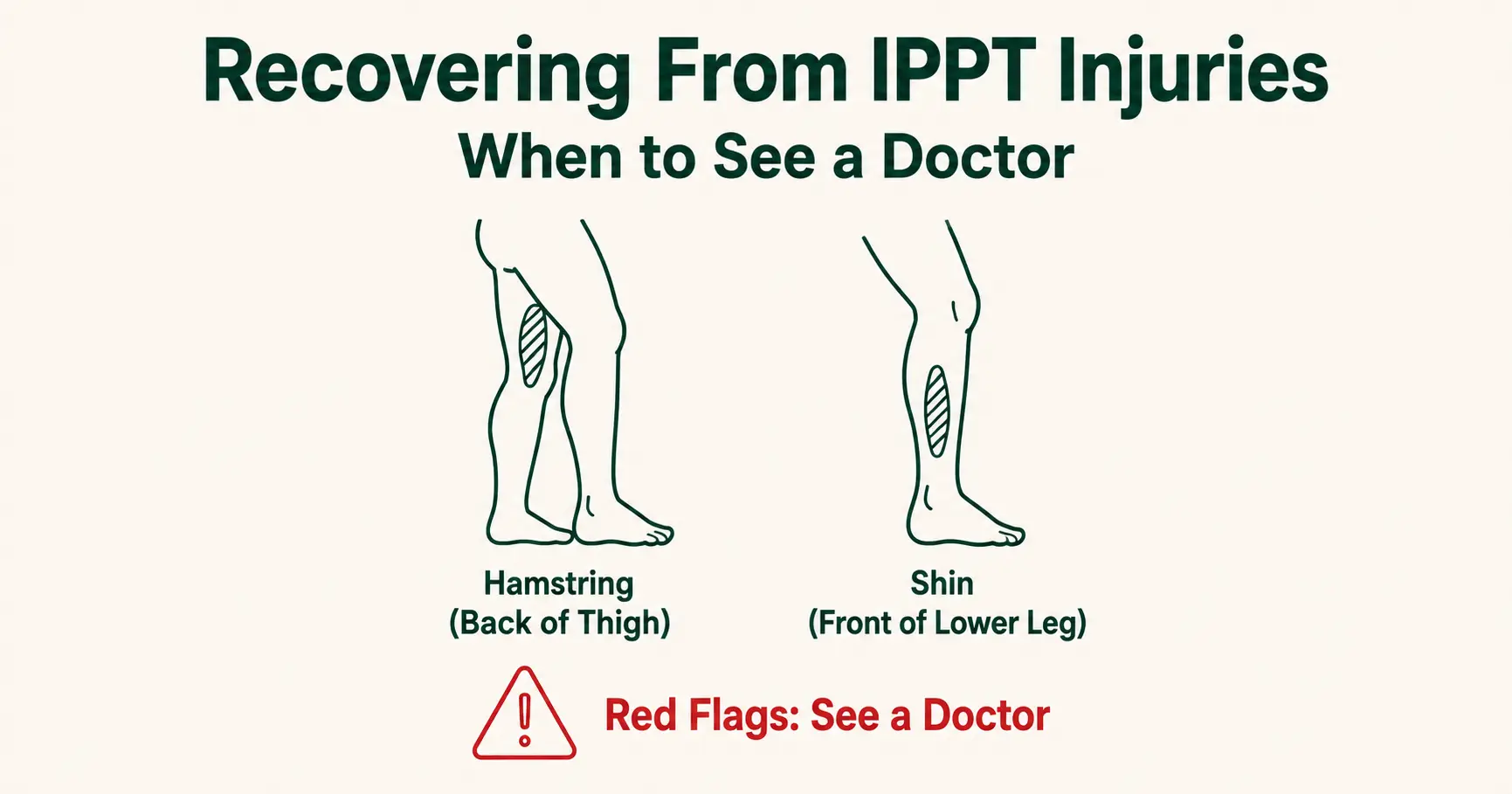
A hamstring strain usually shows up as sudden, sharp pain in the back of the thigh, often during sprinting or a sudden change in direction, exactly the kind of movement that happens during the 2.4km run or interval training.
| Severity | General Presentation |
|---|---|
| Mild strain | Sudden pain, some difficulty moving the leg, but strength and stability are largely unaffected |
| Partial tear | More pain, bruising or swelling, noticeable loss of strength in the leg |
| Complete tear | Severe pain, may be unable to walk or stand normally |
This table is for general awareness only, to help you understand why 2 people can both say “I pulled my hamstring” and mean very different things. It isn’t a tool for diagnosing your own injury.
(Source: AAOS/OrthoInfo and Cleveland Clinic, US-based orthopaedic and sports medicine references..)
What About Shin Pain?
Shin splints are common among runners and typically present as pain along the inside edge of the shinbone. Most cases improve with rest and a gradual return to activity. The important thing to know is that not all shin pain is a simple shin splint.
According to sports medicine sources, if shin pain doesn’t improve after 1 to 2 weeks of rest and modified activity, that’s a signal to get it properly evaluated rather than continuing to train through it. Ongoing pain that doesn’t respond to rest can sometimes point to a stress fracture, which behaves very differently and won’t heal properly if you keep training on it.
(Source: HealthHub, Singapore’s national health portal, guidance from Dr Dinesh Sirisena, Consultant, Sports Medicine, Khoo Teck Puat Hospital.)
What Are the Red Flags That Mean You Should See a Doctor?
A few signs consistently point toward needing professional evaluation rather than home rest.
Pain that doesn’t improve after 1 to 2 weeks of rest
This applies to both hamstring and shin injuries. If rest alone isn’t helping after this window, self-management likely isn’t enough.
Inability to bear weight or significant loss of strength
If you can’t put weight on the leg normally, or you’ve lost meaningful strength compared to before the injury, that goes beyond a mild strain.
Significant swelling or bruising
Some bruising is common with a moderate strain, but significant or spreading swelling and bruising is worth having checked.
Pain that keeps recurring every time you resume training
If the same injury flares up repeatedly every time you return to training, that pattern itself is a signal something hasn’t fully healed or hasn’t been properly addressed.
Any numbness, tingling, or symptoms beyond the muscle itself
These can indicate the issue extends beyond a simple muscle strain and are worth a professional opinion.
How Does This Affect Your Training Plan?
If you’re mid-training block and dealing with one of these injuries, don’t just push through to stay on schedule. Training on an unresolved injury is one of the most common ways I see a minor issue turn into a much longer setback.
Once you’re cleared to train again, head back to the IPPT Calculator to check your target score and rebuild your plan.
(For how to structure your training week around recovery days, see the Training Guide hub. For how heat and exertion separately affect your body during training, see the Heat Injury Prevention guide.)
Frequently Asked Questions
— Adrian Tan, IPPT Trainer & Fitness Content Specialist
This page is for general awareness only and is not medical advice or a diagnostic tool. If you are injured or in pain, consult a doctor.